
Violet: history, meaning and presence in jewelry
Violet has held a prominent place in the history of color as a hue associated with the exceptional. In antiquity, obtaining it depended on extremely rare and complex pigments, which made it a color linked to power, hierarchy, and presence in civilizations like Rome and Byzantium. It was not an everyday color, but a choice that implied visibility and distinction.
Over time, violet has become a symbol of visual culture. In various artistic and cinematic expressions, this color appears associated with profound atmospheres, inner emotional states, and narratives where the image is constructed through sensation rather than direct representation. It is a color that introduces visual density and transforms the environment in which it appears.
In the realm of contemporary cinema and aesthetics, violet tones are frequently used to construct visual universes charged with tension, transformation, and mystery. Their presence reinforces the idea of emotion as atmosphere, rather than as explicit discourse.
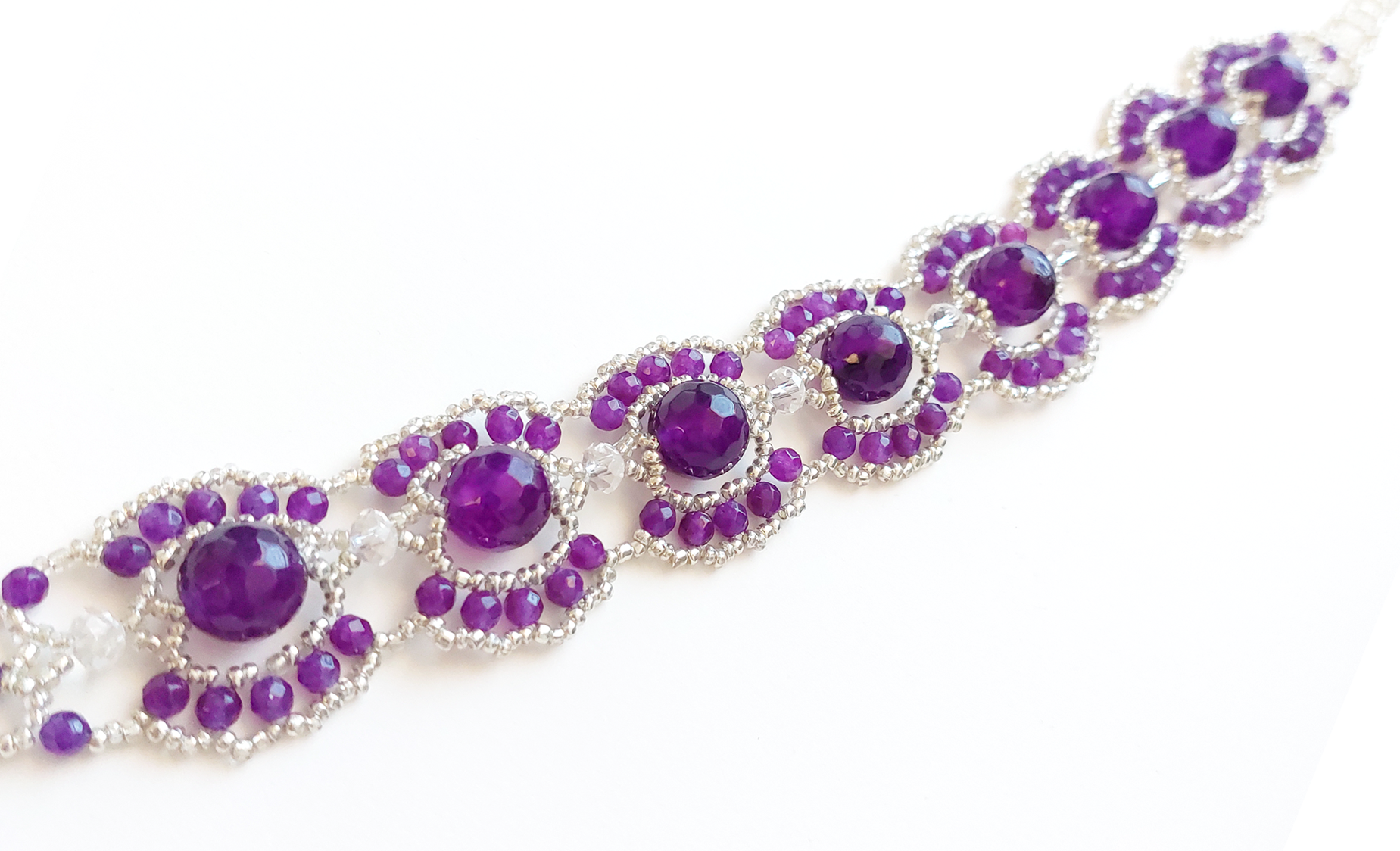
In contemporary jewelry, the violet hue of violet agates is incorporated into pieces that explore the relationship between material, color, and perception. In jewelry design, especially in categories such as designer jewelry , necklaces, and chokers , this type of stone adds visual depth and a distinctive character that goes beyond mere decoration, influencing the overall interpretation of the piece.
Jewelry, such as necklaces, chokers, and earrings with violet agate details, has become a frequent choice within styles like alternative jewelry, contemporary design, and pieces inspired by dark or symbolic aesthetics. Its value lies not only in the material but also in the way the color is integrated into the design structure.
At Blackankh , violet is used in handmade chokers and necklaces as an element that brings visual depth and symbolic weight: transformation, connection with intuition, mental clarity, mystery.
Its presence is linked to an aesthetic quest where jewelry is not merely an adornment, but rather constructs an atmosphere. In each piece, the stone acts as a visual focal point within the design, integrating material, color, and concept into a single, cohesive whole.